
Articles
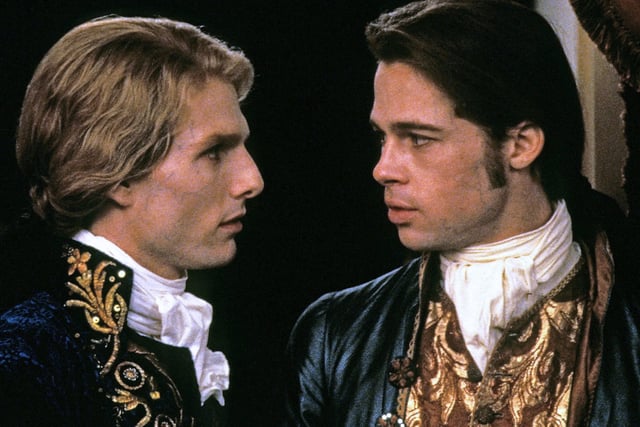
Leigh Bardugo on 50 Years of Interview with the Vampire and the Immortality of Anne Rice’s Lestat
In the past I’ve described grief as a dirty fighter, the foe you think you’ve bested who pops back up with a sucker punch. But the vampire may be a better analogy: a creature who cannot accept death, who lives on and on, sustained by the love and loss we feel and keep feeling. Living with loss means discovering that time does not, in fact, heal all wounds, because time is itself the wound.
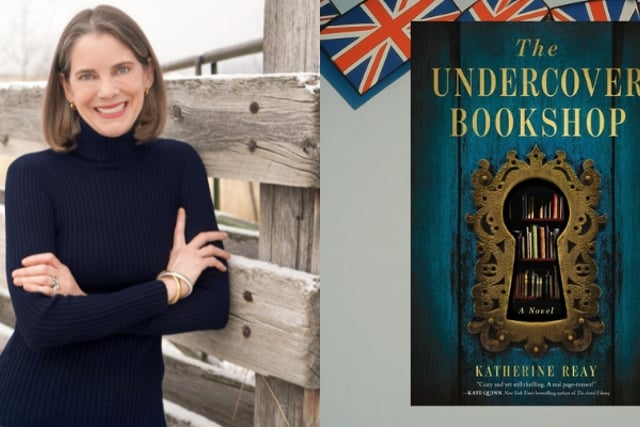
Katherine Reay on the Enduring Popularity of Golden-Age British Mysteries
A distraction was needed at the end of World War II—a solvable puzzle, an intellectual escape, a sense of right prevailing over wrong, along with a happy ending as the final victim is saved, the culprit brought to justice, and the estranged couple (who, granted, spent the greater portion of play pointing fingers at one another) is reconciled.

Only Annalee Newitz would send a sentient slime mold to Pompeii
I wanted to explore how humans could communicate certain things that the People couldn’t, and vice versa. There are things that Murtis can understand about Gardenpath’s past that none of their slime mold friends can. But as you note, humans can’t merge with each other in a restorative way. Gardenpath is really perplexed by this aspect of human life, which seems to be the product of a profound and unhealthy aloneness.
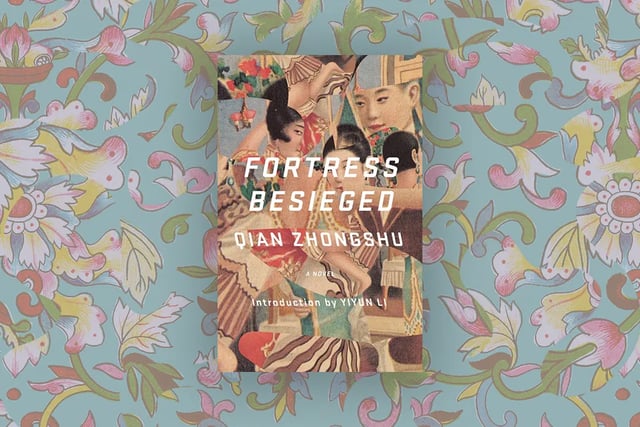
Fortress Besieged: A Great Literary Classic
The new edition of Fortress Besieged is newly released by New Directions with a foreword by the inimitable Yiyun Li and was originally written in the 1940s during the height of the eight-year Sino-Japanese War.

Love is in the Eyre: China turns to classic English novel to teach teens about romance
But reading the story of Jane Eyre –– an orphan girl who finds her independence while suffering a series of hardships and eventually falls in love with her wealthy employer –– will help China’s 14-year-olds “develop sounder values,” said Beijing Daily.
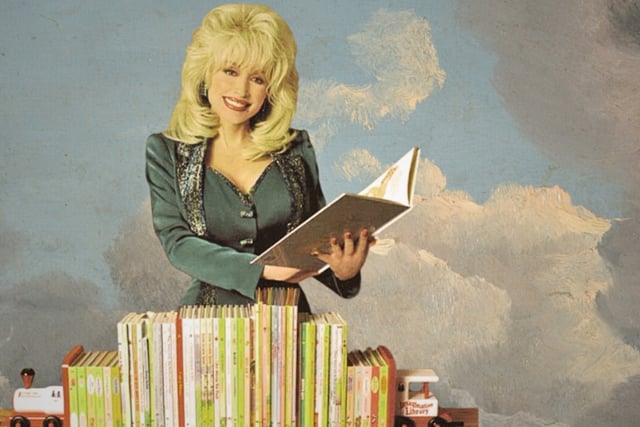
Long Live Dolly Parton, Giver of Books
The books themselves were carefully curated and calibrated with my child’s age. Some were classics and some were new to me. The children were representative of children in this country, meaning they were white and Black and brown and Asian. The pictures were well illustrated and the stories were inspired. It was always an event in our home when one showed up in our mailbox. And on my daughter’s fifth birthday, waiting for me in my email inbox, was a message from Dolly.
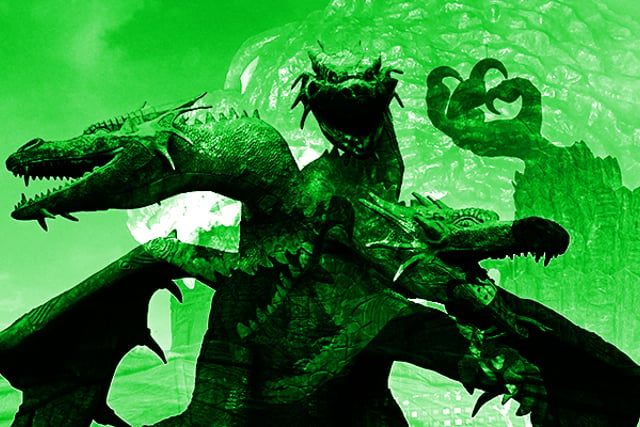
The Demystification of the Giant Monster: A Brief History of Giant Fictional Behemoths
Others, perhaps crueler but certainly wiser, see the danger for what it is: a lifeform with no understanding of society and its rules. A gluttonous fiend that will not pay for the cows it consumes or the buildings it obliterates. A bottomless pit of food and weapons and sacrifices that threatens to upend all the neat streets and urban promenades our species has spent millennia building.
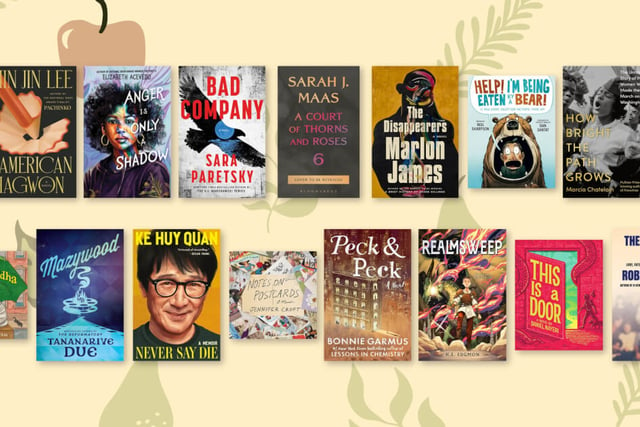
Our most anticipated books of fall 2026
Autumn’s annual bounty of new reads awaits! Our most anticipated reads of the season include Min Jin Lee’s follow-up to her magnificent Pachinko, Marlon James’ latest searing epic, Sarah J. Maas’ reclaiming of her romantasy throne and more.

Americans Are Afraid of Americans Too: a review of Dawn Turner’s “Majestic Hills”
The novel is peppered with soulful music spanning generations of American history, snippets of heroes like Frederick Douglass, and forgotten history. The shifting ground beneath the new development—which, we’re told, was “built on a lie,” threatens to erode it all into oblivion. An imaginary pipeline connects the residents of the new development to the trailer park down the river, and an actual proposed pipeline strains neighborhood relations and threatens to send the flood water through easements and PVC.
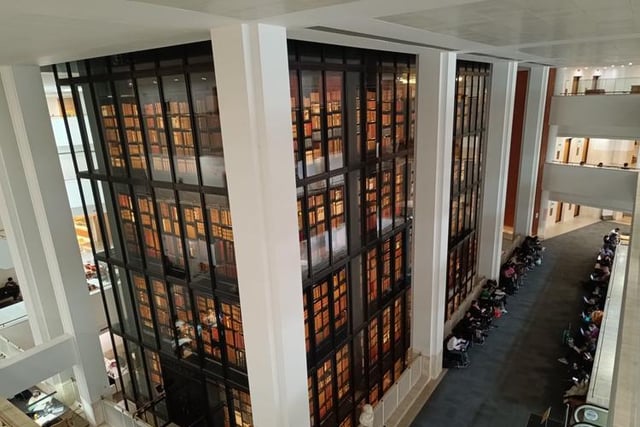
No Reason to Hide It
Over the past few years, a new trend has been growing in independent trade publishing, one that might serve as a healthy antidote to this explosion of market-oriented books. A coterie of small publishers—McNally Editions, Hagfish Books, Hub City Press—has stepped up to join the likes of New York Review Books, Dalkey Archive Press, and Semiotext(e) in reissuing out-of-print books. In January, writer Emmeline Clein put forward the argument in Cultured that publishing houses that focus on such reissues are “the hottest new thing in lit.” But the act of reissuing itself is, of course, not new. It may be tempting to view the publishing world of the past through rose-colored glasses, but aesthetically oriented, risk-taking books have always struggled.
The Maltese Version
This couple is Leonie, in her early 30s, and Max, 40, who live in Chicago. Leonie is a travel writer, and Max is an underemployed academic and translator. When Max is offered an unusual translation gig that requires spending a month in Malta, he accepts. But soon after he leaves Chicago, Max seems to drop off the map. Leonie gets no reply to her texts and phone calls.
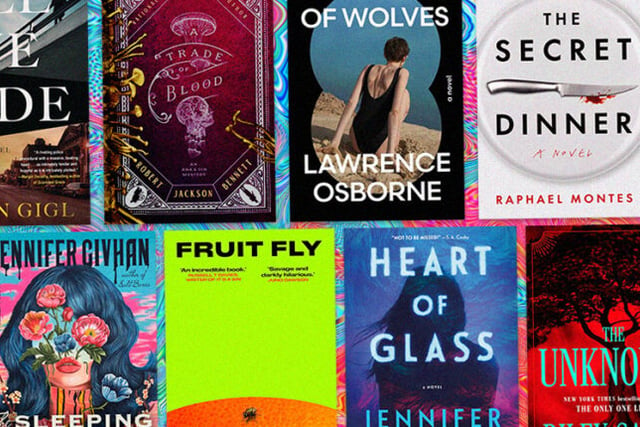
The Best Crime Novels, Mysteries, and Thrillers of August 2026
There’s a lot of heavy hitters coming out this August, all of which are impossible oneself away from (I should know). Below, you’ll find the following: new series installments from Robert Jackson Bennett and William Kent Krueger, the first in a new series from Robyn Gigl, moody character studies from Lawrence Osborne and Chris Bohjalian, daring thrillers from Jennifer Hillier and Josh Silver, haunting gothics from Riley Sager, Donyae Coles, and Jennifer Givhan, and high-concept mysteries from Ellery Lloyd and Raphael Montes.
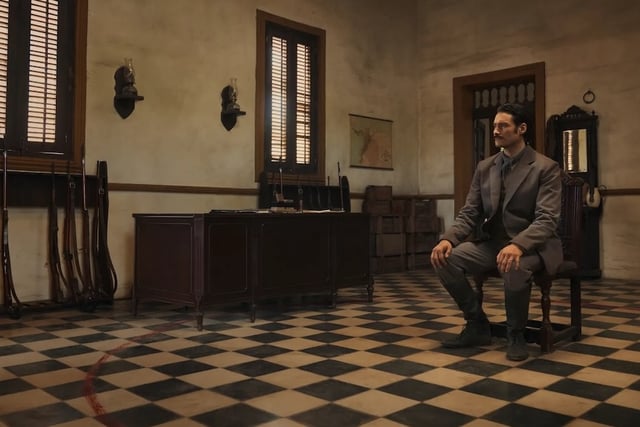
The Literary Film & TV You Need to Stream in August
Every month, all the major streaming services add a host of newly acquired (or just plain new) shows, movies, and documentaries into their ever-rotating libraries. So what’s a dedicated reader to watch? Well, whatever you want, of course, but the name of this website is Literary Hub, so we sort of have an angle. To that end, here’s a selection of the best (and most enjoyably bad) literary film and TV coming to streaming services this month. Have fun.
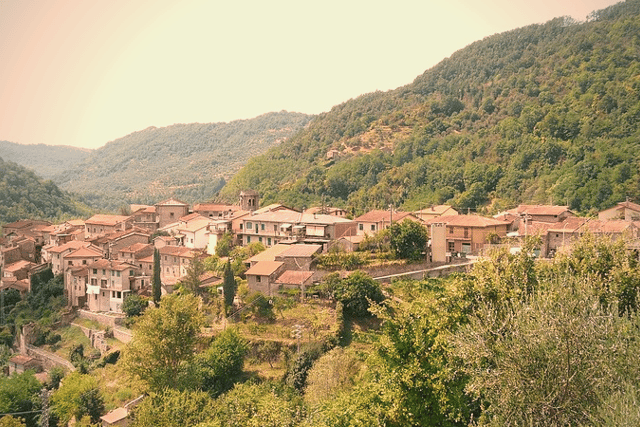
A Culture of Collaboration: The Legacy of Lunigiana’s Traveling Booksellers
In the years of the French Revolution and during the Italian Risorgimento, the itinerants carried in their baskets—hidden below the books—various leaflets and manifestos of secret societies conspiring against the ancien régime. Already, their work was looked down on by traditionalists. They were foreigners, and their books ignited who knew what desires in poor people, who were best kept ignorant so they would work without thinking too much. If, in addition to tales of knights and fair ladies, the itinerant sellers carried around publications dealing with politics, then in the eyes of the police these sellers would become a vector for spreading the plague of the written word.
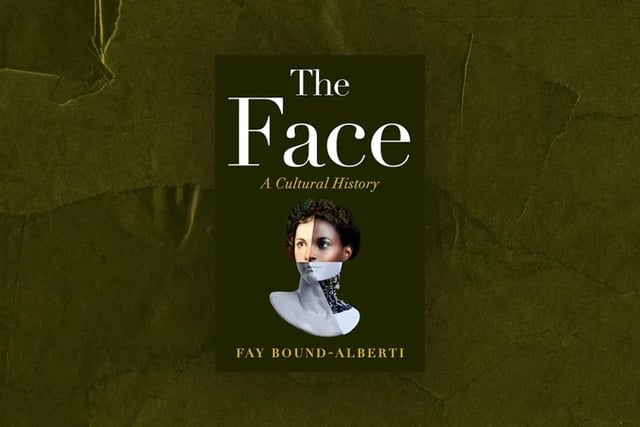
So Is Your Face: A Review of “The Face: A Cultural History” by Fay Bound-Alberti
The idea of the face, what it represents on a personal and societal level, is one that feels often overlooked, or taken for granted. Faces, after all, are ubiquitous. We all have them, we all study our own—probably too much. But how often do we think about the notion of “facehood,” a term coined by Fay Bound-Alberti in her book The Face: A Cultural History. The Face is a well-researched, yet conversational, interrogation of how the idea and understanding of the face has evolved over time. The book runs through the historical evolution of the face, how new technology expands and transforms the face’s meaning, how discredited ideas like eugenics use the face to judge morality and establish social status, race and gender, and how these ideas are still active in our society today.